Describe the Digestive Process and Its Stages
Excrete of waste products in bile 2. Liver detoxifiying the blood-Essay 40.
How To Describe The Digestion Process Quora
This process takes longer for some types of foods than others.

. To digest your food thoroughly its critical you understand the 5 distinct stages and the essentials of each stage. The autonomous nervous system controls the peristalsis contraction and relaxation of muscles within the alimentary canal wall. The stomach makes several digestive juices and enzymes that mix with food.
Final products of lipid digestion are free fatty acids glycerol phospholipids and some cholesterol. Saliva also has an enzyme that begins to break down starches in your food. Get rid of the waste which is anything your body cant use.
The organs that make up your GI tract in the order that they are connected include your mouth esophagus stomach small intestine large intestine and anus. The food is ingested by the alimentary canal and is propelled through the body for further processing. This first essential stage involves smelling tasting touching and chewing your food with the goal of getting it ready to be further processed by the rest of the digestive process.
When you chew your food it. The processes of digestion include six activities. The GI tract is a series of hollow organs that are connected to each other from your mouth to your anus.
The digestion process can be divided into different stages such as digestion in the. Chemical digestion Series of catobolic steps in complex food molecules are broken down to their chemical building blocks it accomplished by enzymes secreted by various glands into the. Break down the food into tiny pieces.
The gastric phase is a period in which swallowed food activates gastric activity in the stomach. The amino acids are absorbed into the bloodstream through the small intestines. Chewing - Chewing is the first stage of the digestive system.
Digestion is a several-step process that begins the moment you put a piece of food in your mouth or sip a drink. Ammonis from protein to ammino acid which are deamination for energy production that produces urea and liver turns it. Ingestion propulsion mechanical or physical digestion chemical digestion absorption and defecation.
Your digestive system is made up of the gastrointestinal GI tract and your liver pancreas and gallbladder. The broken-down food is then absorbed into the bloodstream from the small intestine and the nutrients are carried to each cell in the body. The digestive system acts in stages to digest our food.
Three stages are involved in swallowing food. Move the small particles out of the digestive system and the rest of the body. There are 4 steps to digestion.
Here you start to salivate and secrete some gastric fluid into your stomach. Here are the major stages of the digestive system. The entire length of our digestive system is around 20 to 30 feet.
This is the job of our digestive system. Each stage is important and prepares the food for the next stage. We need food to fuel our bodies for energy growth and repair.
Your salivary glands make saliva a digestive juice which moistens food so it moves more easily through your esophagus into your stomach. Your digestive system is uniquely designed to turn the food you eat into nutrients which the body uses for energy growth and cell repair. After you swallow peristalsis pushes the food down your esophagus into your stomach.
The gastric phase of digestive secretion happens after you swallow food when protein stimulates the release of stomach acid and digestive enzymes. The digestive tract is a tube through the body starting at the mouth and ending with the anus. The cephalic phase of gastric secretion occurs before food enters the stomach due to neurological.
So please bear with me if this paragraph seems a bit technical. The solid organs of the digestive system are the liver gallbladder and pancreas. Absorb nutrition into the body.
There food is mixed with saliva for lubricationUnderstanding the basics of the digestive process will help you make necessary changesinformation is power. The digestive tract is basically a series of hollow organs jointed in a twisting tube from the mouth all the way down to the anus. Breaking it down When you begin chewing glands.
The digestive system converts the foods we eat into their simplest forms like glucose sugars amino acids that make up protein or fatty acids that make up fats. The first of these processes ingestion refers to the entry of food into the alimentary canal through the mouth. The steps in protein digestion are summarized in Figure 1517 and Table 156.
The first begins in the mouth. Carbohydrates for example break down the fastest. Nonetheless the digestion process makes them readily absorbable.
The mouth stomach esophagus small and large intestines anus and rectum are the hollow organs the GI tract is made up of. Phagocytosis by Kupffer cells of old RBC and bacteria. Figure 1517 Protein digestion is a multistep process that begins in the stomach and continues through the intestines.
It is important to understand that they do not require much digestion. The stomach also produces gastric lipase which plays its part in lipid digestion. Digestion includes a complex combination of mechanical and chemical processes.
The process of digestion takes place in 6 major steps. The cephalic stage begins as you think about or smell food and results in the stimulation of your saliva glands. Phases of Digestion Cephalic Phase.
Next the stomachs strong muscles act like a blender to turn food into a useable form.
Process Of Digestion Digestion Process In Mouth Stomach Intestines
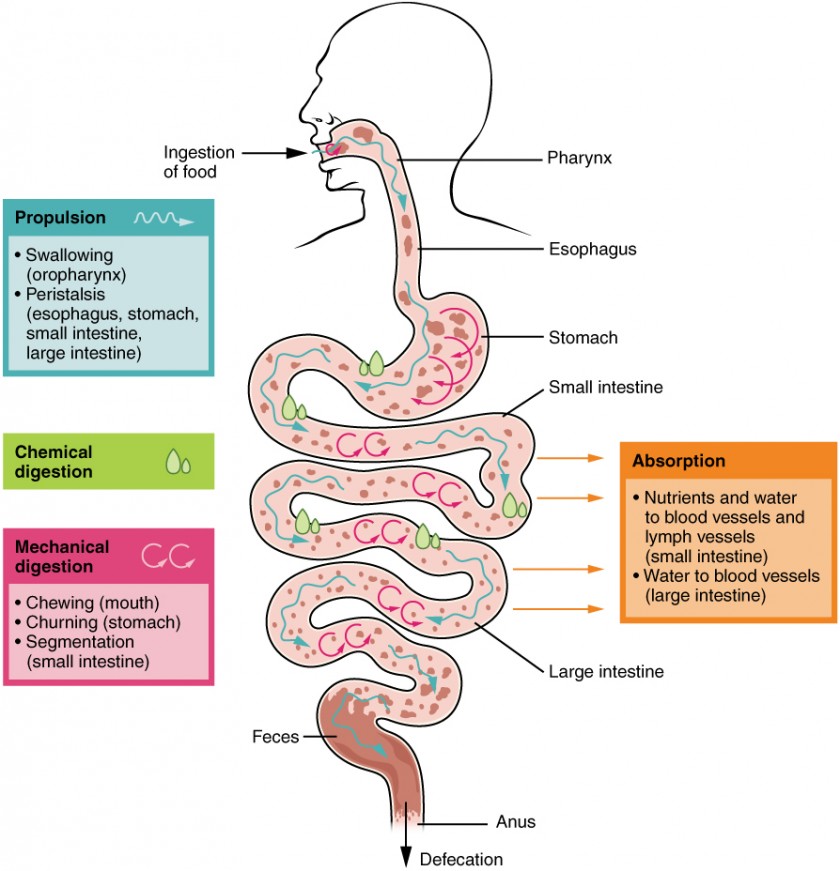
Digestive System Processes And Regulation Anatomy And Physiology Ii

Human Digestive System Parts Functions And Organs


Comments
Post a Comment